Introduction: Why Upskilling Is Now a Career Survival Skill
Imagine you’ve been doing your job well for years. You know the ropes, you deliver results, and your employer seems happy. Then one morning you open your inbox and find a company-wide memo: a new AI tool is being rolled out next month and half of your day-to-day tasks will be handled by it from now on.
Sounds like science fiction? It isn’t. This scenario is playing out in companies around the world right now and it’s accelerating fast.
We are living through one of the biggest shifts in the history of work. Artificial intelligence is no longer a buzzword reserved for tech startups. It’s in marketing departments, law firms, logistics companies, and hospitals. And with it comes an uncomfortable truth: the skills that got you here may not be enough to keep you here.
That’s not meant to scare you. It’s meant to motivate you! Because the good news is that the workers who are thriving in this new landscape aren’t necessarily the most technically gifted. They’re the ones who never stopped learning. In 2026, lifelong learning and continuous upskilling aren’t a nice-to-have anymore. They’re career survival skills.
The Numbers Don’t Lie — What the Research Actually Says
Let’s ground this in real data, not hype. Some of the world’s most respected institutions have crunched the numbers and the picture is both sobering and full of opportunity.
170 million new jobs — and 92 million disappearing.
According to the World Economic Forum’s Future of Jobs Report 2025, the global labour market is heading for a dramatic transformation. By 2030, an estimated 170 million new roles will be created, while 92 million existing ones will be displaced. That’s a net gain of 78 million jobs, but only for those with the right skills.
Source: WEF Future of Jobs Report 2025
Nearly 40% of today’s skills will be outdated by 2030.
The same report finds that employers expect 39% of the core skills required in the job market to change within the next five years. That’s not a small tweak. That’s a fundamental reset of what it means to be a qualified professional.
More than half the workforce needs urgent upskilling.
A 2026 report from DeVry University surveyed employers across the US and found that, on average, 55% of their workforce needs to significantly upskill within five years just to remain employable. Even more striking: 63% of employers admitted they had already passed over employees for promotions because their skills were out of date.
Source: DeVry University – Bridging the Gap Report 2026
And then there’s Goldman Sachs research, which estimates that widespread AI adoption could displace 6–7% of the US workforce, with white-collar, information-based roles among the most exposed.
The bottom line: This isn’t about robots replacing everyone overnight. It’s about a fundamental shift in which skills employers value, and those who adapt early, will have a genuine advantage.
Which Jobs Are Actually at Risk?
Here’s where things get specific and perhaps a little uncomfortable, depending on what you do for a living.
In early 2026, both Microsoft and Anthropic published separate analyses of how AI tools are impacting different types of work. Microsoft, using anonymised data from its Copilot tool, found that AI is most heavily used in what it calls ‘information work’ — jobs that involve creating, processing, and communicating information.
Source: Microsoft & Anthropic AI Job Impact Studies (2026) via Rappler
Among the roles most exposed to AI disruption:
- Content & communication: writers, journalists, translators, customer service representatives
- Data & analysis: data scientists, financial analysts, accountants handling routine tasks
- Entry-level tech roles: junior web developers, computer user support specialists
- Administrative work: data entry clerks, scheduling assistants, basic legal document processing
On the other side of the spectrum, roles that require physical presence, hands-on judgment, or genuine human connection remain strong, like healthcare workers, skilled tradespeople, social workers, and educators.
There’s also a fascinating paradox emerging in the tech sector itself. Entry-level software and data roles (which used to serve as the first rung on the career ladder) are shrinking fast. In the UK, tech graduate roles fell by 46% in 2024. In the US, some data suggests junior tech postings dropped by as much as 67%. The traditional entry-level job, as we knew it, is being restructured.
Source: The Crisis of Entry-Level Labor in the Age of AI – Rezi.ai (2026)
The Skills You Should Be Building Right Now
So what should you actually focus on? The WEF Future of Jobs Report 2025 gives us a clear roadmap. And it’s not just about learning to code. Think of future-proof skills in three buckets:
A) AI & Digital Literacy — The New Basic Requirement
You don’t need to become a software engineer. But you do need to understand how AI tools work, how to use them effectively, and (critically!) how to spot their limitations. Skills like prompt engineering, working with automation platforms, and basic data literacy are fast becoming the new ‘Microsoft Office’ of the modern workplace.
The WEF report confirms that AI, big data, and cybersecurity will see the fastest growth in demand of any skills category between now and 2030.
Source: WEF Future of Jobs Report 2025 – Skills Outlook
B) Human Skills — The Ones AI Can’t Replace
Here’s the reassuring part: the skills that make us distinctly human are more valuable than ever. According to the WEF, the top core skill employers demand today is analytical thinking, cited by 7 out of 10 companies as essential. Close behind are resilience and adaptability, leadership, creative problem-solving, and emotional intelligence.
As AI takes over repetitive tasks, workers who can interpret complex situations, build real relationships, lead teams through uncertainty, and think creatively will become increasingly irreplaceable.
“Analytical thinking remains the top core skill for employers, with seven out of ten companies considering it essential. This is followed by resilience, flexibility and agility, along with leadership and social influence.” — WEF Future of Jobs Report 2025
C) Green & Sustainability Skills — A Growing Frontier
One area that’s often overlooked in the AI conversation: sustainability. As governments and corporations accelerate the shift to clean energy and ESG compliance, there’s a surging demand for professionals who understand renewable energy systems, carbon reporting frameworks, and sustainable business practices.
Source: WEF Future of Jobs Report 2025 – Green Skills
How to Protect Yourself — 6 Practical Strategies
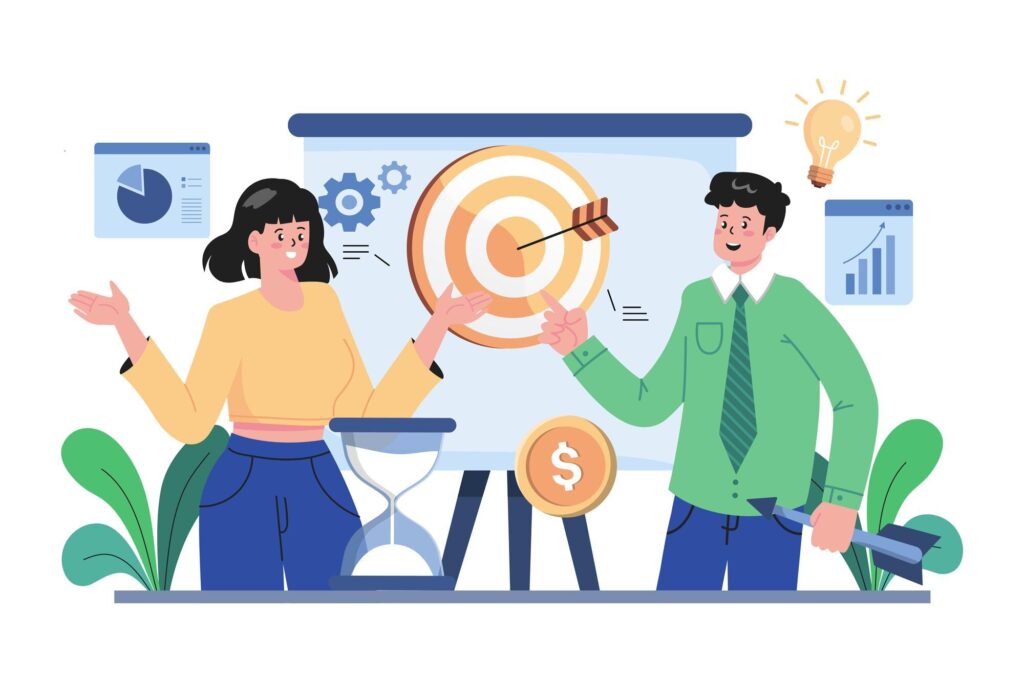
Knowing there’s a problem is one thing. Knowing what to do about it is another. Here are six concrete steps to help you stay relevant, confident, and in demand:
1. Run a Personal Skills Audit
Be honest with yourself. Look at your daily tasks and ask: which of these could an AI tool handle reasonably well in the next 12–24 months? This isn’t about panicking. It’s about being proactive! Identify your vulnerable spots, but also your strengths that are hard to automate.
2. Choose Micro-Credentials Over Long Degree Programmes
You don’t need to go back to university for two years. Short, focused courses (bootcamps, micro-credentials, professional certificates) have proven to be among the most effective ways to close skills gaps quickly. Research shows that programmes running just three to six months can give workers a meaningful, real-world competitive edge.
Source: NTUC Singapore – AI Disruption and Lifelong Learning (2026)
3. Learn to Work With AI, Not Against It
The workers who are thriving right now aren’t the ones ignoring AI. They’re the ones using it as a productivity multiplier. Experiment with AI tools in your current role. Find where they save you time, and redirect that time into higher-value work that requires judgment, creativity, and human connection. AI is a colleague, not a competitor!
4. Embrace Reverse Mentoring
Here’s a fascinating trend: research shows that more than half of Gen Z employees are actively helping their more senior colleagues learn how to use AI tools. If you’re experienced, don’t let pride stop you from learning from younger team members. If you’re junior, offer to share your knowledge. It builds your visibility and value at the same time.
Source: Entry-Level Jobs and AI Report – Rezi.ai (2026)
5. Use the Training Benefits Your Employer Already Offers
This one might surprise you: almost 9 out of 10 employers say they offer company-paid upskilling benefits, but only around half of their employees actually use them. Before you pay out of pocket for a course, check what’s already available to you. The opportunity is very likely sitting right there, unclaimed.
Source: DeVry University – Closing the Gap Report
6. Build a Growth Mindset
Lifelong learning and career development aren’t just about courses and certificates. They’re a mindset shift. It means staying curious, being willing to be a beginner again, and seeing change as an opportunity rather than a threat. Workers who approach uncertainty with openness and resilience are better positioned to navigate career transitions, regardless of their technical background.
The Other Side of the Story: New Jobs, New Opportunities
Let’s be clear: this isn’t all doom and gloom. The same forces disrupting the job market are also creating exciting new opportunities and plenty of them.
The WEF report projects that 170 million new roles will emerge this decade in fields like AI governance, green energy, data engineering, healthcare, and education technology. These aren’t niche positions for a handful of specialists. They represent a genuine restructuring of the economy toward higher-value, more meaningful work.
And employers, by and large, are not trying to replace their workforce wholesale. According to WEF data:
- 80% of employers plan to upskill their workers with AI training
- 85% are investing in reskilling and upskilling programmes
- Only 40% plan to reduce headcount due to AI automation
Source: WEF Future of Jobs Report 2025 – Coursera Analysis
The message from businesses is clear: they need people who can grow with them. Those who invest in themselves are the ones who will be given the opportunity to step into these new, better roles.
Conclusion: Lifelong Learning Is Not a Trend — It’s an Attitude
The age of AI isn’t something that’s coming. It’s already here. And it’s reshaping what it means to be a skilled, employable professional in every industry.
But here’s the thing: this shift doesn’t have to be frightening. The workers who will come out ahead aren’t the ones who know the most right now. They’re the ones who are willing to keep learning! The ones who stay curious, who embrace new tools, who invest in both their technical skills and their deeply human ones.
You don’t have to do everything at once. Start small:
- Take one online course this month on a topic relevant to your field
- Spend 30 minutes a week experimenting with an AI tool in your workflow
- Have an honest conversation with your manager about what skills the business needs next
- Check what upskilling benefits your employer already offers and actually use them
Lifelong learning and career upskilling aren’t a sign of weakness. They’re not an admission that what you know isn’t enough. They’re a declaration that you’re serious about your career and that you’re not willing to stand still while the world moves forward.
In 2026, the most powerful thing you can put on your CV isn’t a specific skill. It’s the proven ability to keep learning new ones!
FAQ: Lifelong Learning & AI — Your Questions Answered
Q1: I’m not a tech person at all. Do I really need to learn about AI?
Yes, but not in the way you might think. You don’t need to learn how to build AI or write code. What matters is basic AI literacy: understanding what these tools can and can’t do, and knowing how to use them in your daily work. Think of it like the early days of the internet. You didn’t need to understand HTML to benefit from email. The same logic applies here.
Q2: How much time do I realistically need to invest in upskilling?
More than zero, less than you fear. Even dedicating 30 to 60 minutes a week to learning something new (a short online course, a podcast, experimenting with an AI tool) compounds significantly over months. Many micro-credential programmes are designed to be completed in just a few weeks alongside a full-time job. The barrier is lower than most people assume.
Q3: Which online platforms are best for upskilling in 2026?
Several strong options exist depending on your field and learning style:
- Coursera — partnerships with top universities, strong on AI and data skills
- LinkedIn Learning — practical professional skills, good for business and soft skills
- edX — university-level courses, many free to audit
- Google & Microsoft Learn — free, focused on their own AI and cloud tools
- Duolingo / Babbel — if language skills are relevant to your field
Many of these platforms offer free tiers or employer-sponsored access. Worth checking before paying out of pocket.
Q4: My employer doesn’t offer any training. What can I do?
First, it’s worth asking directly! Many companies have training budgets that employees simply never request. If that goes nowhere, many governments offer subsidised upskilling programmes. In the EU, for example, initiatives around digital skills are well-funded. In the US, community colleges often offer affordable professional certificates. And as mentioned above, platforms like Google and Microsoft offer free AI training that’s genuinely useful.
Q5: I’m in my 50s. Is it too late to reskill?
Absolutely not! And the data backs this up. The fastest-growing segment of the workforce in many countries is workers aged 55 and older. Experience, professional judgment, and established networks are things AI cannot replicate. The goal isn’t to reinvent yourself from scratch. It’s to layer new skills onto a strong existing foundation. That’s actually a significant advantage over a 25-year-old starting from zero.
Q6: Will AI eventually replace all jobs?
The honest answer is: no one knows for certain and anyone who tells you they do is overconfident. What we can say based on current evidence is that AI will transform most jobs rather than eliminate them entirely. The roles most at risk are those built around repetitive, predictable tasks. Jobs involving creativity, complex judgment, human relationships, and physical skills are proving far more resilient. The future of work is most likely human-AI collaboration, not human replacement.
Q7: What’s the single most important thing I can do right now?
Start! That’s genuinely it. The biggest mistake people make is waiting until they feel the pressure before acting. Pick one skill that’s relevant to your industry, find a short course or free resource, and spend 30 minutes with it this week. The workers who will navigate this transition well aren’t the ones with the most talent. They’re the ones who started learning before they had to!
Still not sure where to begin? Try asking an AI tool (like ChatGPT or Claude) what skills are most in demand in your specific field. You’ll get a personalised answer in seconds. That itself is a good first lesson in working with AI.